
hemodialysis accesses
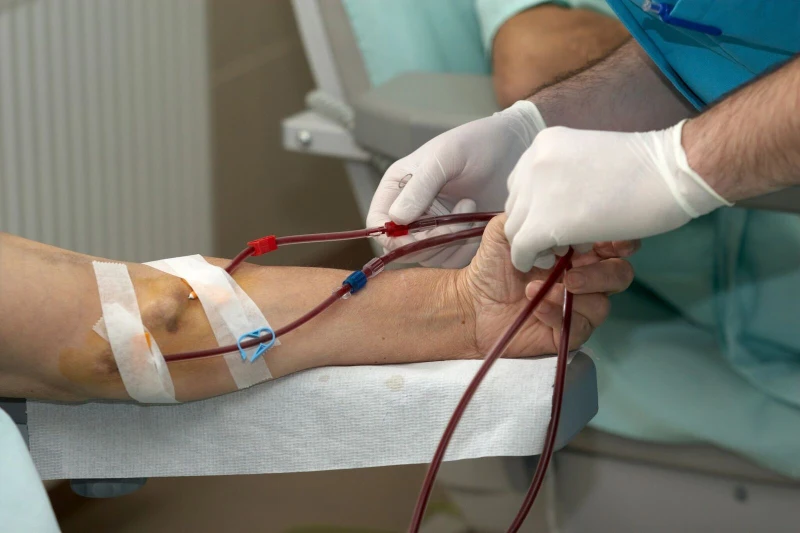
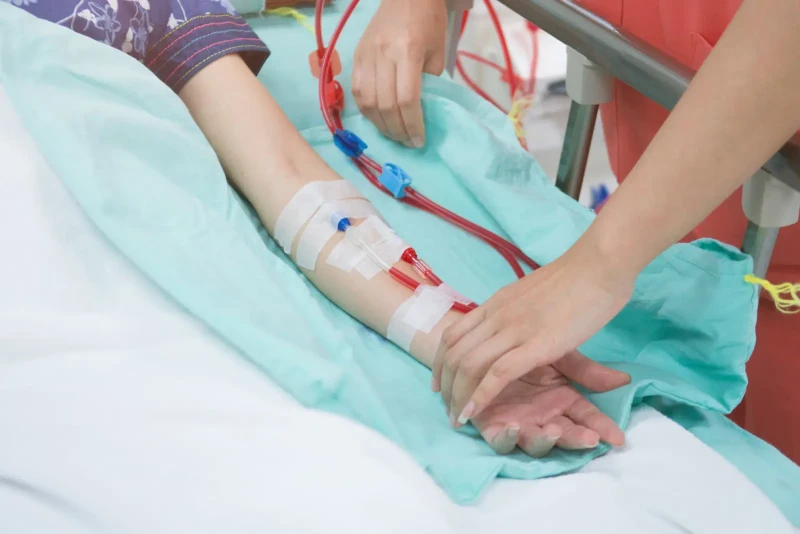
Creating a Stable and Safe Access for Continuous Dialysis
For patients with chronic kidney failure who require regular dialysis, establishing a reliable access to the bloodstream (hemodialysis access) is crucial. These accesses must be durable, safe, have minimal complications, and provide sufficient blood flow for effective dialysis.
Why is Hemodialysis Access Important?
Hemodialysis is practically impossible without reliable and adequate access to the bloodstream. A good access should:
Provide sufficient and continuous blood flow
Have minimal complications
Be as long-lasting and stable as possible
The choice of the appropriate access type depends on the patient’s clinical condition, vascular status, age, underlying diseases, and the expected duration of dialysis.
Types of Vascular Access for Hemodialysis
Arteriovenous Fistula (AV Fistula)
The fistula is the best type of access for chronic patients. In this method, an artery and a vein beneath the skin are connected, allowing the vein to gradually enlarge and strengthen to handle dialysis flow.
Advantages:
High durability
Lowest risk of infection
Optimal long-term function
Arteriovenous Graft (AV Graft)
If the patient does not have a suitable vein for a fistula, a synthetic graft is used to connect the artery and vein.
Advantages:
Usable in patients with weak vessels
Shorter maturation time compared to a fistula
۳. Central Venous Catheter
In emergency or temporary situations, short-term or permanent catheters may be used in central veins such as the jugular or subclavian vein.
Advantages:
Ready for immediate use
Suitable for urgent initiation of dialysis
Disadvantages:
Higher risk of infection and thrombosis
Lower performance compared to fistulas and grafts
Post-Hemodialysis Access Care and Important Tips
After creating vascular access, proper care plays a crucial role in maintaining its function.
Important Tips:
Check daily for signs of infection or inflammation (redness, swelling, pain, or discharge)
Avoid direct pressure or heavy weight on the arm with a fistula or graft
Maintain hygiene at the access site
Report any changes in the thrill or pulse of the fistula to your doctor
When Should You Contact Your Doctor?
If any of the following symptoms occur, contact your doctor immediately:
Fever or chills
Severe pain or swelling at the access site
Absence of bruit (sound) in the fistula
Pus discharge or continuous bleeding
Difficulty during dialysis or slowed blood flow
Specialties and Treatment Areas
Hemangioma Treatment
Treatment of vascular masses in infants and children with laser therapy and endovascular interventions
Leg Varicose Vein Treatment
Non-surgical treatment of varicose veins using advanced sclerotherapy and laser techniques
Sclerotherapy
A quick and minimally invasive method for treating superficial and spider veins
Laser Therapy
Treatment of port-wine stains, birthmarks, telangiectasia, and vascular lesions
FAQ
Which is Better: Fistula or Graft?
The fistula is the first choice for hemodialysis patients due to its greater durability and lower risk of infection; however, in certain conditions, a graft may be a more suitable option.
How Long After Surgery Can a Fistula Be Used?
Typically, it takes 6 to 8 weeks for a fistula to mature and become usable for dialysis.
Can Access Be Used in Both Arms?
No, the access should be in only one arm, while the other arm is used for blood pressure measurements and injections.
Is It Possible to Repair or Replace a Vascular Access?
Yes, if the access malfunctions, it can be repaired, replaced, or substituted.