varicose veins
What Are Varicose Veins?
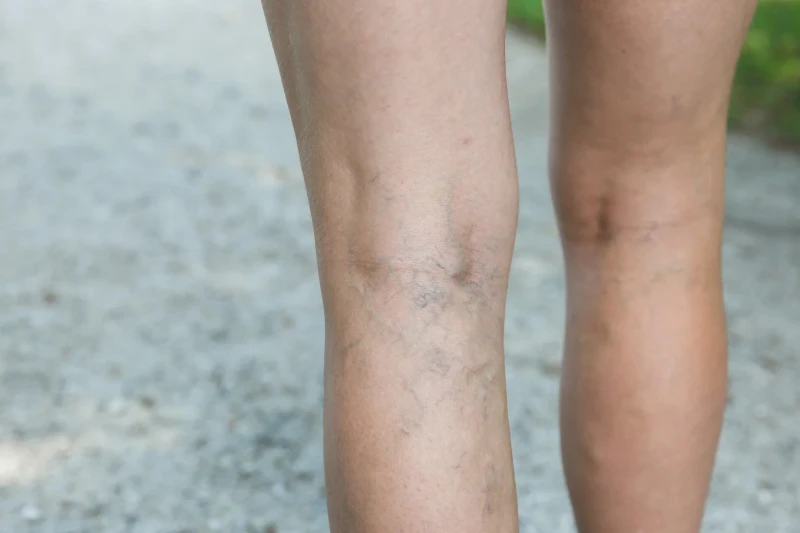
Varicose veins occur when your veins become enlarged, stretched, and overfilled with blood. They usually appear swollen and raised, with a bluish-purple or red color, and can cause pain or a heavy feeling in the legs. This condition is particularly common in women. About 25% of all adults have varicose veins, which most often appear in the lower legs.
Causes of Varicose Veins
Varicose veins occur when veins do not function properly. Veins have one-way valves that prevent blood from flowing backward. When these valves fail, blood begins to pool in the veins instead of continuing toward the heart, causing the veins to enlarge. Varicose veins often affect the legs, as these veins are farthest from the heart and gravity makes it harder for blood to flow upward.
Some potential causes of varicose veins include:
Pregnancy
Menopause
Age over 50
Prolonged standing
Obesity
Family history of varicose veins
Symptoms of Varicose Veins
Early symptoms of varicose veins include visibly twisted or bulging veins, usually on the legs. You may also experience pain, swelling, heaviness, or aching around the enlarged veins.
In some cases, discoloration and further swelling may occur. In severe cases, veins can bleed significantly or lead to ulcer formation.
Diagnosis of Varicose Veins
Your doctor will likely examine your legs and visible veins while you are sitting or standing to diagnose varicose veins. They may also ask about any pain or symptoms you are experiencing.
Additionally, your doctor may recommend an ultrasound to assess blood flow. This non-invasive test uses high-frequency sound waves, allowing the doctor to see how blood flows through your veins.
Depending on the location, venography may be performed for further evaluation. During this test, a special dye is injected into your legs, and X-rays are taken of the area. The dye appears on the X-ray, giving the doctor a clearer view of your blood flow.
Tests like ultrasound or venography help ensure that other issues, such as blood clots or blockages, are not causing the pain and swelling in your legs.
Lifestyle Changes for Varicose Veins
The following changes may help prevent the formation or worsening of varicose veins:
Avoid prolonged standing.
Lose weight or maintain a healthy weight.
Exercise to improve blood circulation.
Wear compression stockings or thigh-high socks.
If you already have varicose veins, these measures should be followed to prevent new veins from forming. You should also elevate your legs whenever resting or sleeping.
Compression: Your doctor may recommend wearing special compression stockings. These apply enough pressure to help blood flow more easily to the heart and reduce swelling.
Surgery: If lifestyle changes are not effective, or if your varicose veins cause significant pain or affect overall health, a more invasive procedure may be considered.
Vein ligation and stripping is a surgical treatment that requires anesthesia. During this procedure, the surgeon makes small incisions in the skin, cuts the varicose vein, and removes it through the incisions. Although updated surgical techniques exist, these procedures are now less common due to newer, less invasive options.
Laser therapy is a modern method that can be performed under local anesthesia.
Other Treatment Options for Varicose Veins
Currently, a wide range of minimally invasive treatment options for varicose veins are available, including:
Sclerotherapy: Using liquid or foam chemical injections to block larger veins.
Microsclerotherapy: Using liquid chemical injections to block smaller veins.
Laser Surgery: Using light energy to close off the vein.
Endovenous Thermal Ablation: Using heat and radiofrequency waves to block the vein.
Endoscopic Vein Surgery: Using a small illuminated camera inserted through a tiny incision to close off the vein.
Outlook for Individuals with Varicose Veins
Varicose veins usually worsen over time, even if lifestyle changes are made to control them and manage discomfort. In some cases, varicose veins can lead to ulcers or sores on the legs, blood clots, or chronic inflammation. If any of these symptoms occur, you should see a doctor, who may recommend a more invasive approach, such as surgery or other interventions.
Specialties and Treatment Areas
Hemangioma Treatment
Treatment of vascular masses in infants and children with laser therapy and endovascular interventions
Sclerotherapy
A quick and minimally invasive method for treating superficial and spider veins
Laser Therapy
Treatment of port-wine stains, birthmarks, telangiectasia, and vascular lesions
Hemodialysis Access
Creation, repair, and maintenance of vascular access for patients with kidney failure to undergo dialysis
FAQ
Does Varicose Vein Treatment Always Require Surgery?
No, most hemangiomas are benign and do not pose a threat to a person’s life. However, depending on their location, size, and rate of growth, they may require more serious treatment—especially if they are associated with impaired organ function, ulcers, or bleeding.
What Is the Best Time to Treat Varicose Veins?
You can start treatment whenever the physical or visible symptoms of varicose veins become problematic for you. Most patients undergo treatment during the cooler seasons (autumn and winter), as compression stockings may be required after the procedure.
Can varicose veins come back after treatment?
Treated veins are permanently eliminated, but over time, new veins may appear in other areas. With proper care and regular follow-up, the likelihood of recurrence is reduced.
Is varicose vein treatment painful?
Modern varicose vein treatments are minimally invasive and are usually performed without pain or with very mild discomfort. There is no need for anesthesia or hospitalization, and the patient can resume normal activities the same day.